

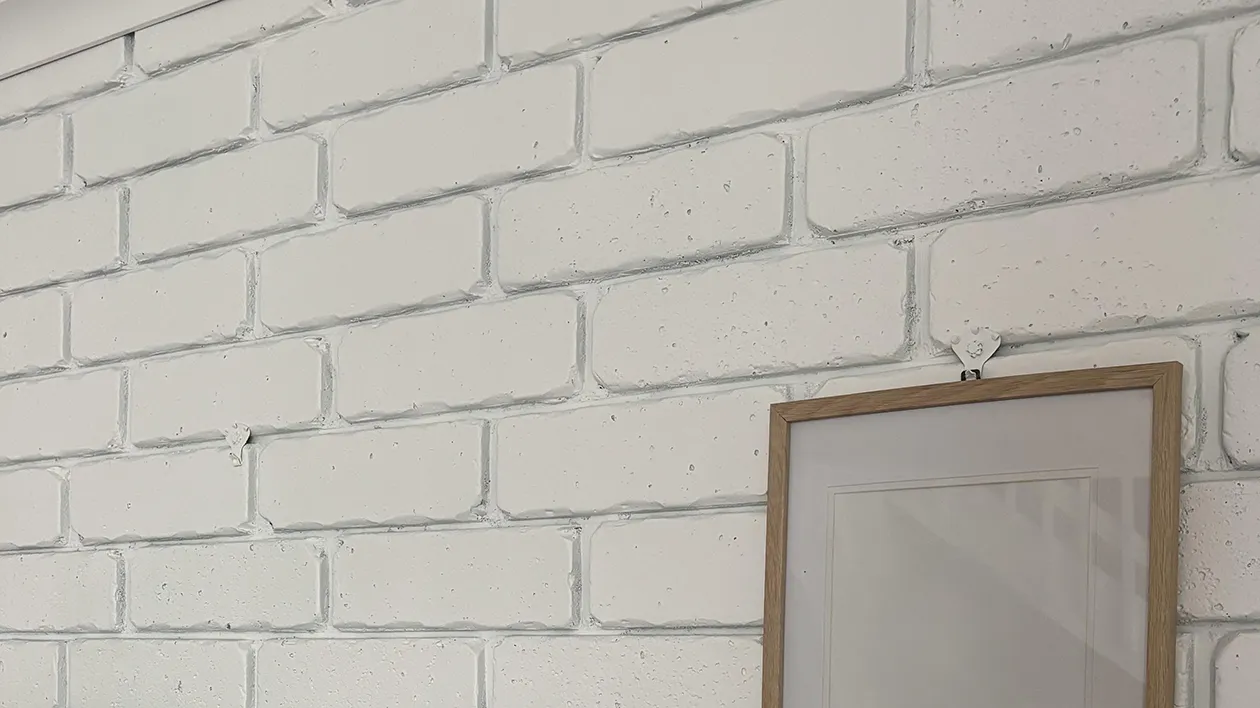
Painting bricks is a semi-permanent masonry treatment that modernises a dated facade, fence, or fireplace. Done well, it protects the wall from weather and completely changes the look of a house. Done badly, it traps moisture and peels. Often inside two years.
It comes down to two things. Breathable masonry paint, not standard house paint. And real preparation before a drop of primer goes on. Get the primer wrong and nothing you do after that will save the job.
Is painting bricks a good idea?
Painting brick is a good idea if your masonry is structurally sound but visually dated. That is the whole test. It is also fundamentally irreversible, and it needs recoating every 10 to 15 years. Because standard paint traps moisture, painting damp or deteriorating brick will accelerate structural damage and cause severe peeling.
That is the honest version. Once brick is painted, stripping it back is expensive, messy, and rarely produces a clean result. You are committing the wall to a maintenance cycle for as long as the house stands.
It is usually the right call when:
- The bricks are mismatched, patched, or a colour you cannot live with
- Previous repairs have left visible tonal differences across the wall
- The brickwork is sound, dry, and not shedding face material
- You want a uniform, contemporary finish
It is usually the wrong call when:
- The brick is chipping, flaking, or losing its face
- There is rising damp, persistent moisture, or heavy white salt bloom
- The mortar is crumbling and has not been repointed
- You actually like the texture and variation in the brick
Paint, limewash, or brick stain?
| Masonry paint | Limewash | Brick stain | |
|---|---|---|---|
| Typical cost | Moderate | Low | Moderate to high |
| Lifespan | 10 to 15 years | 5 to 7 years (weathers gradually) | 15 to 20 years |
| Breathability | Good (if acrylic or mineral) | Excellent | Excellent |
| Reversibility | Effectively permanent | Can be scrubbed back | Permanent |
| Finish | Solid, uniform colour | Soft, mottled, patina | Brick texture stays visible |
Best for: masonry paint suits ugly or mismatched bricks where you want the variation gone. Brick stain suits pristine brickwork that is simply the wrong colour. Limewash suits older homes where a softer, weathered look is the goal. If the brickwork is too far gone for any coating, rendering the wall and painting the render is the other route worth pricing.
Two checks you can do today
Splash a cup of water on the wall. If it soaks in quickly, the brick is porous and a good candidate for limewash or stain. If it beads on the surface, the wall has likely been sealed or previously treated, and that changes your primer selection entirely.
Then look at the bottom metre. This is the check almost nobody does, and it is the one that decides whether the job succeeds. Rising damp in Australia usually stops between 1.0 and 1.5 metres up the wall. The damage concentrates lower, between 0.5 and 1.2 metres, where the moisture evaporates and leaves its salt behind. Those figures come from a technical guide published by the Heritage Council of NSW with its Victorian and South Australian counterparts. That band is where you see crumbling mortar, brick faces breaking down, and powdery white deposits.
If that band on your wall looks sound, you are in good shape. If it is crumbling, painting will make it worse, not better. The same guide is blunt about coatings: anything that stops a masonry wall breathing shortens its life, and sealing walls with water-repellent coatings is listed flatly among the things not to do. Sydney homes have an advantage here, though. The guide notes that Sydney’s more humid climate and lower soil salt levels produce slower decay rates than somewhere like Adelaide, where hot drying summers and salty soils make salt damp notorious.
What kind of paint do you use on brick?
The best paint for bricks is a breathable 100% acrylic masonry paint or a mineral silicate paint. Avoid oil-based paints and standard exterior house paints. They trap moisture inside the porous brick, which causes efflorescence, bubbling, and rapid coating failure.
Brick is not a sealed surface. It moves moisture in and out constantly. Your coating system has to let it do that. This is the main way brick differs from the timber and render substrates covered in our guide to exterior painting in Sydney.
The shopping list
Primer
An alkaline-resistant masonry primer or sealer. Dulux 1Step Prep or a masonry-rated Zinsser product will both do the job. The primer is not optional and it is not the place to save money, because it is the layer stopping the brick from drinking your topcoat.
Top coat
Dulux Weathershield in a matte or low-sheen finish is the standard choice for Australian exteriors. Taubmans Sunproof Exterior is a workable alternative. Both are 100% acrylic, which is what you want.
Tools
- 15mm to 20mm nap roller (the long nap is what gets into the texture)
- Stiff nylon brush for scrubbing
- Sugar soap or a masonry cleaner
- Thick synthetic bristle brush for cutting mortar lines
- Painter’s tape and heavy canvas drop sheets
Work out how much you need
Measure the wall (height x width in metres) and divide by 10. That is roughly your litres per coat. Buy enough for one coat of primer plus two topcoats, and buy it all at once so the tint batch matches.
Brick absorbs far more paint than a rendered or plasterboard wall. If you are working off a coverage figure from a smooth surface, you will run short.
How do I prep brick for paint?
You cannot just paint over dirty or raw brick. Preparation means cleaning the surface hard enough to remove dirt and efflorescence, repairing damaged mortar, and applying an alkaline-resistant masonry primer. The primer seals the porous face so the brick does not soak up the topcoat and fail early.
On a brick job, prep takes longer than painting. It is also the part most DIY jobs skip.
Step by step
1. Wire brush the surface
Scrub the whole wall with a stiff brush to lift loose mortar, dust, and any white powdery efflorescence. Efflorescence is salt migrating out of the masonry, and painting over it guarantees the coating will lift.
2. Repair the mortar
Rake out and repoint any crumbling joints. Let repairs cure fully before you go any further, which usually means at least a week for fresh mortar.
3. Wash the wall
Apply sugar soap or a masonry cleaner with a sponge or a low-pressure hose. Rinse thoroughly, then let it dry for a full 24 to 48 hours. The brick has to be bone dry, not surface dry.
4. Tape and protect
Tape adjacent trims, windows, and downpipes. Lay heavy canvas drop sheets, not plastic, because plastic slides and pools.
5. Seal and prime
Cut the primer into the mortar lines with a brush first, pushing it deep into the joints. Then roll the brick faces. Follow the tin for recoat times.
If the brick has been painted before, the rules change. The condition and type of the existing coating decides your approach, and we cover that in should you paint over old paint.
The test hardly anyone does: vanadium staining
Many pale clay bricks carry vanadium salts. That is not a problem until you paint them.
AS/NZS 2311:2017, the Australian and New Zealand Standard for painting buildings, warns those salts can migrate up through a paint film and surface as yellow, green, or reddish-brown discolouration weeks after the job looks finished. Iron contaminants in the brick or mortar can produce rust staining the same way.
The Standard’s answer is a trial patch. One coat of latex on a test area, then wait. Inspect it for staining after four to six weeks. If stains appear, the wall needs a stain-blocking masonry sealer before any finishing coats go on. Skip the trial and you find out after the second topcoat, when fixing it means sealing and recoating the entire elevation.
Four to six weeks is a long wait, which is exactly why this step gets skipped. If you are working to a deadline, the risk sits mostly in pale bricks, and a painter who knows the local brick stock will usually recognise a stain-prone wall on sight.
Common mistakes
Power washing on high pressure. High pressure blasts out old mortar and forces water deep into the wall. Use a garden hose and a scrub brush instead.
Painting damp brick. Wait a minimum of 48 hours after rain or washing. In a Sydney winter, or on a shaded south-facing wall, give it longer.
Skipping the primer on “clean-looking” brick. Clean and sealed are not the same thing. Raw brick will pull the binder out of your topcoat, exactly the way bare plaster does, and for exactly the same reason.
Self-check before you prime
Press a strip of painter’s tape onto the dry brick, then pull it off. If it comes away coated in red dust, the wall is not clean enough to prime. Keep scrubbing.
How to paint bricks: the two-coat method
Painting brick takes both a brush and a roller. Because the surface is heavily textured, you brush the mortar joints first and then roll the flat faces, applying two full coats for weather resistance and colour uniformity.
Trying to do the whole thing with a roller leaves pinholes in every mortar groove, and they are obvious once the light hits the wall on an angle.
1. Cut the mortar
With a thick synthetic bristle brush, paint all the mortar lines in a section roughly 2 metres by 2 metres. Work the paint into the joint rather than skimming across it.
2. Roll the faces
While the mortar paint is still wet, roll the brick faces with the 15mm to 20mm nap roller. Use a W pattern to spread it evenly, then finish with strokes all running the same way.
3. Move to the next section
Keep a wet edge. Finishing a section and coming back to it half an hour later is how you get lap marks.
4. Wait and recoat
Respect the recoat time on the tin, which is usually 2 to 4 hours for acrylics. Recoating too early skins the surface and traps solvent underneath.
You have succeeded when no pinholes of original brick colour show in the deep mortar grooves and the sheen is uniform right across the wall. Check it at low sun angle, not at midday.
An internal feature wall or brick fireplace follows the same brushing and rolling sequence, though the product selection differs. See our interior painting in Sydney page for the interior systems we use.
Is painting brick going out of style?
Painting brick is not going out of style, but the palette has shifted. Stark white has given way to warm, earthy tones and softer limewash finishes. Correctly prepped and painted with a premium acrylic masonry paint, a painted brick exterior will last 10 to 15 years before it needs recoating.
In Sydney, the practical lifespan depends heavily on aspect and exposure. A north-facing wall taking full afternoon sun will fade faster than a sheltered southern elevation, and homes closer to the coast deal with salt load on top of UV.
Choosing a colour that lasts
Because the decision is permanent, conservative colours protect resale value better than trend colours. Warm whites, charcoals, greys, and muted greens age well across a decade. Deep saturated colours fade more visibly and show chalking sooner.
If you are unsure, get a colour consultation before you commit. A colour on your actual wall looks nothing like the same colour on a chip in a showroom. Light changes it through the day.
Keeping it looking good
Keep a spare sealed tin of your exact tinted topcoat in the garage. Walk the wall once a year and touch up any chips, because water getting behind the film at a chip will undermine the surrounding paint far faster than UV ever will.
Get the wall assessed before you commit
Brick is one of the least forgiving surfaces to paint, and it is also one of the most expensive to fix once a coating fails. If the wall is large, high, or showing any sign of moisture, it is worth getting a professional assessment before you commit.
Upscale Painting & Decorating (NSW Licence 453040C) is a painting company in Sydney that has been painting Sydney homes since 2005. Esmayel Nazari quotes every job himself, and every quote carries the Upscale Promise:
- Free Quote
- Fixed Price Guarantee
- Free Dulux Colour Consult
- Not-a-Scratch Guarantee
- Dulux 5-Year Workmanship Warranty
We handle brickwork as part of our residential painting service.
Call 0490 094 862 for an obligation-free quote, or get in touch here.
Sources
- Salt attack and rising damp: a guide to salt damp in historic and older buildings. Heritage Council of NSW, Heritage Victoria, SA Department for Environment and Heritage, and Adelaide City Council.
- AS/NZS 2311:2017, Guide to the painting of buildings. Standards Australia and Standards New Zealand. Clauses 2.5.2 and 3.9.1.