
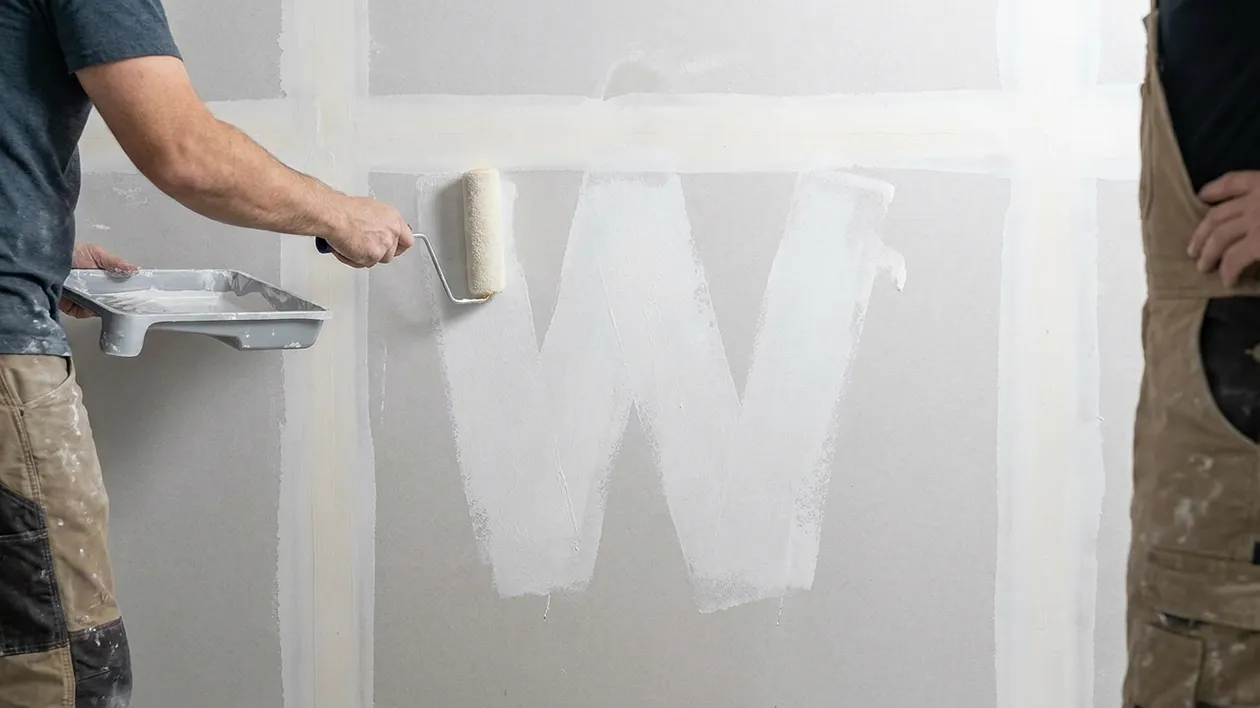
Paint primer is a preparatory coating applied before your topcoat. It helps paint grip the surface, seals porous materials and stops stains or rust from bleeding through. You only need one if you are painting bare surfaces, difficult materials like plastic and metal, or making a big colour change.
That surprises most people. Primer is not a mandatory first step on every job, and skipping it in the right situation can save you a full day of work. Skipping it in the wrong situation is how you end up with paint peeling off in sheets.
Start with the 60-second test below. Then use the recipes for the two surfaces that cause the most trouble: plastic and rusty metal.
Do I Really Need a Primer Before Painting? (The 60-Second Primer Test)
You don’t always need a primer. If you are painting over existing paint that is in good condition and a similar colour, you can usually skip it. You do need a primer if you are painting raw plasterboard, bare timber, plastic or rusty metal, or going from a dark colour to a light one.
The “Skip or Prime” Checklist
Run through these questions before you open a tin:
| Question | If yes |
|---|---|
| Is the surface bare or unpainted (new plasterboard, raw timber, MDF)? | PRIME |
| Is it plastic, laminate or rusty metal? | PRIME |
| Is the existing paint glossy, and you’re applying a matte or low-sheen finish over it? | PRIME |
| Are there water stains, smoke marks or tannin bleed on timber? | PRIME (stain blocker) |
| Have you patched holes or cracks with filler? | SPOT PRIME so the patches don’t show through |
| Does the wall leave chalky powder on your hand? | PRIME (sealer binder, after washing) |
| Are you painting a similar colour over clean, sound, matte existing paint? | SKIP (go straight to topcoat) |
What Happens If You Skip Primer When You Need It?
The topcoat fails. Skip primer when the surface calls for it and the paint peels, blisters or dries patchy, usually within the first year. On sound, clean existing paint of a similar colour, skipping it makes no difference to the result.
Your Action Plan
- If you scored PRIME: jump to the surface guides below for exactly what to buy and how to apply it.
- If you scored SKIP: wash the wall with sugar soap, rinse with clean water, let it dry completely and start painting. Repainting over existing paint? Our guide to painting over old paint covers the full checks.
The 2% rule
When paint peels, people blame the tin. Industry failure analyses tell a different story: only around 2% of coating failures trace back to faulty paint, while up to 95% are caused by poor surface preparation (NACE International coatings reference; INGAL Specifiers’ Manual via the Australian Steel Institute). Choosing the right primer for the surface is a big part of that prep, and it’s the step most DIY jobs get wrong.
Are Primer and Undercoat the Same? (Choosing Your Base)
They’re not the same thing. A primer bonds to the raw surface, such as plastic, metal or bare timber, to create adhesion. An undercoat goes over the primer to build a smooth, opaque base for your topcoat. Many modern acrylics combine both jobs in one tin, though.
Which Base Coat Do You Need?
| Product type | Best for |
|---|---|
| Dedicated primer | Difficult adhesion: plastic, rusty metal, glossy tiles, galvanised steel |
| Dedicated undercoat | Smoothing uneven surfaces or hiding a dark existing colour |
| Combination primer, sealer and undercoat (e.g. Dulux 1Step Prep) | Standard interior plasterboard and painting over existing paint |
Best for Beginners
Buy a quality water-based 3-in-1 primer, sealer and undercoat. It handles most household jobs on its own. One tin, one less coat.
Painting Water-Based Over Oil-Based Paint
Older homes often hide oil-based enamel on doors, trims and skirting boards. Here’s how to check. Rub a hidden spot with a rag dampened in methylated spirits. If colour comes off on the rag, it’s water-based and you can paint straight over it. If nothing comes off, it’s oil-based: sand it back and apply a primer labelled suitable over enamel before your water-based topcoat.
How to Prime and Paint Plastic (So It Actually Sticks)
Wall paint won’t stick to plastic. To paint plastic successfully, you need an adhesion-promoting primer made specifically for it, usually sold as an aerosol spray. These primers are designed to bond with the slick surface of the plastic so your topcoat has something to hold on to. You’ll find plastic primers in the spray paint aisle at Bunnings and most hardware stores.
The Plastic Priming Recipe
- Scuff. Lightly sand the plastic with 120-grit sandpaper to knock back the factory shine. You’re not trying to remove material, just dull the surface.
- Clean. Wipe it down with isopropyl alcohol or a degreaser to remove dust, oils and factory residue. Let it dry completely.
- Prime. Apply two thin, even coats of a plastic primer spray. Follow the recoat time on the can, usually only a few minutes between light coats. Thin coats beat one heavy coat every time.
- Test. Wait 24 hours, then do the fingernail test: try to lightly scratch the primed surface in an inconspicuous spot. If it holds, you’re good. If it lifts, the surface wasn’t clean or scuffed enough.
- Paint. Apply your acrylic or enamel topcoat directly over the cured primer.
Common Mistake: Wall Primer on Outdoor Furniture
Using a brush-on, water-based wall primer on plastic outdoor furniture is the classic DIY failure. It looks fine for a few weeks, then the sun and rain get to it and it peels off in sheets. Plastic needs a primer formulated for plastic. There’s no shortcut here.
What to Look For
Read the label first. Look for a product made specifically for plastic, such as Dulux Spray Plastic Primer, and check it suits the type of plastic you’re painting. Some plastics, like polyethylene, won’t hold paint even with a primer, so always test a hidden spot before you commit.
When to Use Red Oxide Primer (Painting Over Rust)
Red oxide is a heavy-duty, anti-corrosive primer designed for ferrous metals, meaning iron and steel. Its brick-red colour comes from rust-inhibiting pigments. You can’t paint directly over flaking rust, but once the loose rust is removed, red oxide bonds to the remaining surface and helps stop corrosion from spreading.
Why Rust Is a Bigger Deal in Sydney
Corrosion testing published in Australian coatings guidance found bare steel in Sydney’s CBD loses about a third of a millimetre every decade, roughly eight times faster than steel in inland Dubbo. Right on the surf coast at Newcastle Beach, steel corrodes about 48 times faster than in Dubbo. Salt air does the damage. Most of metropolitan Sydney sits in a “medium” corrosion zone under the Australian standard, and along the NSW coast salt air can carry 20 km or more inland (AS/NZS 2312 corrosivity guidance).
Live near the water, from Cronulla to Vaucluse to Mosman? Then anti-corrosive primer isn’t optional. Gates, balustrades and steel posts all need it.
The Rust Eradication Recipe
- Wire brush. Scrub the rusty area hard with a stiff wire brush (or a wire wheel on a drill for larger areas) to remove all loose, flaking rust. You want a firm, stable surface.
- Convert (optional). For heavy rust you can’t fully remove, apply a rust converter first and leave it for the time stated on the label.
- Apply red oxide. Brush on one solid, even coat of red oxide primer, working it into pits and edges.
- Topcoat. Yes, you can paint directly over red oxide. Once it’s dry enough to recoat (check the tin), apply two coats of exterior enamel or a metal-specific topcoat.
Try This Now: The Magnet Test
Hold a magnet against the metal. If it sticks, the metal contains iron, and red oxide is the right primer. If it doesn’t stick, you’re likely dealing with aluminium or galvanised steel, and you need an etch primer instead. Red oxide won’t bond properly to those surfaces.
Five seconds. Wrong tin avoided.
Application Rules: Coats, Old Paint and Retinting
Do I really need two coats of primer?
Usually not. One even coat is enough for adhesion. Use two coats only if you’re covering a very dark colour or priming a highly porous surface, like raw MDF, that soaks up the first coat completely.
Can I prime and paint on the same day?
Usually, yes. Water-based primers are generally recoatable within a few hours, so check the tin and you can often topcoat the same afternoon. Just don’t leave primer exposed for weeks. It isn’t formulated to stand up to UV or moisture on its own, so it can break down and compromise your finish.
Do I still need two coats of paint over primer?
Yes. Primer isn’t a colour coat, so plan on two topcoats for even colour and full durability.
Can you get paint retinted at Bunnings?
Generally, yes, but only in one direction. A paint counter can usually retint a tin darker, but it can’t make a dark paint lighter. If you bought the wrong shade and it’s too light, ask in store. If it’s too dark, you’ll likely need a new tin.
Pro tip: primer can also be tinted grey to help a new colour cover a dark wall faster, which can save you a topcoat.
What about old or leftover tins?
Old tins in the garage? Check them first. Our guide on what happens if you paint with expired paint explains the warning signs.
When to Call in the Professionals
Remember the 2% rule: when a paint job fails, it’s almost never the paint. It’s the prep underneath.
Priming one outdoor chair or a rusty gate is a manageable weekend job. Big jobs are different. Priming a whole house, a strata building with failing exterior paint, or a coastal property with large areas of rust, bare render or mixed surfaces takes experience. Getting the prep wrong on a big job means the finish fails early, and redoing it costs far more than doing it right the first time.
We get the prep right. Upscale Painting & Decorating is a Dulux Accredited Painter and a certified Master Painters Australia member, and our painters average more than 10 years of experience matching the right primer and paint system to every surface, from plasterboard and timber to steel and render. We’re fully licensed (Licence No. 453040C) and insured, and every job is backed by our 100% workmanship guarantee with a written warranty. We deliver on time and on budget across Sydney, including the Eastern Suburbs, North Shore, Inner West, CBD and Sutherland Shire.
Whether it’s interior painting or exterior painting, call us any time on 0490 094 862 for an obligation-free quote.